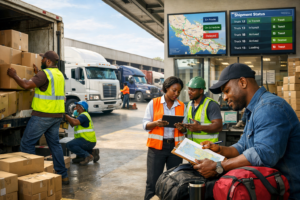
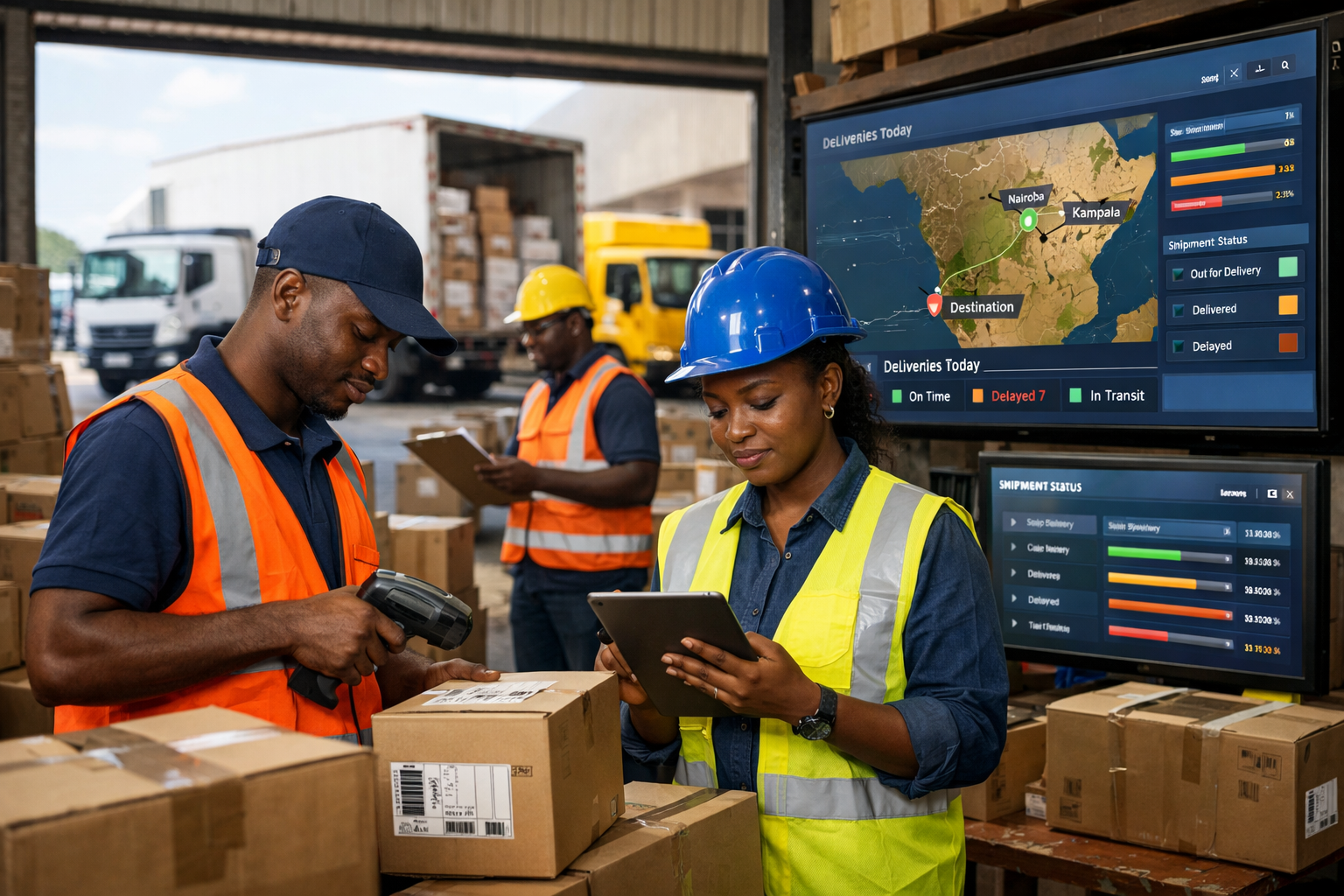
In today’s competitive business environment, improving on‑time delivery isn’t just a nice‑to‑have — it’s a core driver of customer satisfaction, revenue growth, and operational efficiency. For many brands, investing in smarter logistics strategies has translated directly into faster deliveries, lower costs, and stronger customer loyalty. In this post, we explore real success stories from companies that transformed their supply chain operations and significantly boosted their delivery performance.
1. Amazon: Redefining Speed with Logistics Innovation
Few companies are as synonymous with fast delivery as Amazon. Through continuous investment in logistics infrastructure — including extensive warehouse networks, advanced automation, and data‑driven routing systems — Amazon has been able to offer same‑day and two‑day delivery for millions of products around the world.
Key Logistics Improvements:
- Expansion of fulfilment centres located near major customer populations
- Integration of robotics and automated sorting technologies
- Real‑time tracking and predictive delivery timing
These investments have allowed Amazon to set industry benchmarks for delivery reliability and speed. This logistics advantage not only meets customer expectations but also supports Amazon’s broader strategy of rapid fulfilment and scalability.

2. Maersk: Supply Chain Visibility Leads to Better Delivery Performance
Shipping giant Maersk faced the age‑old challenge of managing complex global logistics operations. To tackle this, the company embraced a Supply Chain Control Tower approach — a centralised system that integrates data from vessels, ports, and cargo movements, giving logistics planners real‑time visibility into shipments.
Results Achieved:
- End‑to‑end tracking of shipments in real time
- Early identification of delays and proactive mitigation steps
- Improved scheduling and route optimisation
By using this system, Maersk was able to significantly reduce unexpected delays and provide customers with more accurate delivery estimates. This level of transparency has made the company’s delivery services more reliable — and more valued — by its global customer base.
3. Walmart: Integrating Data for On‑Time Delivery Excellence
Walmart’s scale requires sophisticated logistics management. The retailer revamped its supply chain with real‑time inventory tracking and integrated transportation systems. Through its Supply Chain Control Tower, Walmart now monitors stock levels, order status, and transport routes across tens of thousands of products.
Impact on Delivery:
- Greater visibility into product movement
- Better alignment between inventory levels and customer demand
- Higher on‑time delivery performance
With these tools, Walmart has not only streamlined inventory management and reduced stockouts but also improved delivery reliability across its network of stores and online customers.
4. Jumia: Building Logistics Capacity Across Africa
E‑commerce leader Jumia has faced one of the toughest delivery challenges — operating across countries with varying infrastructure quality. To improve delivery performance, Jumia built out a network of warehouses, drop‑off stations, and last‑mile delivery partners across Africa, particularly in Nigeria, Morocco and Ivory Coast.
Strategic Logistics Moves:
- Opening integrated fulfilment warehouses
- Partnering with local couriers for last‑mile delivery
- Centralising goods storage for efficient order processing
These efforts have helped Jumia reduce delivery times and ensure orders are fulfilled consistently, even in hard‑to‑reach regions — a major advantage in markets where delivery delays have historically been a barrier to e‑commerce adoption.
5. Takealot: Streamlining E‑commerce Logistics in South Africa
South Africa’s leading online retailer Takealot has combined in‑house delivery services with strategic distribution centres to improve reliability and speed. Its logistics network includes major depots around Cape Town, Durban and Johannesburg, along with partnerships for same‑day or next‑day delivery via its Mr D brand.
Logistics Enhancements:
- Multi‑location distribution centres near customer bases
- Dedicated delivery fleets and driver networks
- Packaging optimization to speed handling and reduce processing time
By optimising both warehousing and delivery, Takealot has positioned itself as one of the few African e‑commerce players able to offer reliable fast delivery, a key differentiator in the regional market.
6. Zipline & Retail Partners: Consistent On‑Time Delivery Through Outsourced Logistics
Globally, third‑party logistics providers like Zipline Logistics have enabled brands to scale deliveries without investing in their own fleet or infrastructure. In one reported case, a retailer improved its on‑time delivery rate to 96% by partnering with a logistics provider capable of handling the bulk of their shipments nationally.
Advantages Observed:
- Outsourced operational expertise
- Better shipment visibility and scheduling
- Dedicated freight capacity for consistent fulfilment
For brands that lack logistics resources, outsourcing to specialist providers can translate to higher on‑time delivery rates and freed‑up capital for growth activities.
7. Flypointinternational: Reducing Lead Times for FMCG Companies
Regional logistics specialists such as Flypointinternational have helped fast‑moving consumer goods (FMCG) manufacturers improve delivery performance in West Africa. Through technology‑enabled tracking, optimized route planning, and strategic warehousing, some companies experienced a 30% improvement in delivery timelines — reducing delays and increasing customer satisfaction.
Outcomes:
- Better route planning
- Improved warehouse utilisation
- Streamlined distribution operations
These improvements not only helped businesses deliver on time but also cut transportation costs and strengthened market presence.
Why Logistics Investment Matters for On‑Time Delivery
Across these success stories, some common themes emerge:
1. Real‑Time Visibility
Systems like control towers and tracking platforms give businesses the ability to monitor every stage of shipment and proactively manage exceptions.
2. Strategic Infrastructure
Warehouses placed close to customers and hubs connected to transportation routes reduce delivery distances and processing time.
3. Data‑Driven Planning
From AI‑powered route optimisation to inventory forecasting, analytics allow companies to anticipate issues and adjust before delays occur.
4. Partnering with Specialists
Not every company can build its own delivery fleet. Partnering with 3PLs or logistics specialists gives access to expertise and capacity that accelerate delivery performance.

Conclusion
Optimising logistics is no longer a back‑office operational detail; it’s a strategic business decision that drives customer satisfaction and growth. Whether through advanced technology, expanded distribution networks, or partnerships with specialised logistics providers, companies that prioritise delivery reliability see direct benefits — from faster delivery times to stronger competitiveness.
As brands across Africa and beyond look to improve their supply chain operations, real‑world examples from Amazon to Jumia offer valuable lessons in how to turn logistics investments into measurable delivery success.
References
- Logistics Success Stories & Insights — A compilation of logistics case studies including Amazon’s approach to fast delivery and innovation.
- 🔗 https://eoxs.com/new_blog/logistics-success-stories-case-studies-and-insights/
- Case Studies: Success Stories of Companies Implementing Control Towers — Explains how supply chain visibility tools helped companies like Maersk and Walmart improve delivery performance.
- 🔗 https://medium.com/@Elyxrai/case-studies-success-stories-of-companies-implementing-control-towers-d324733d5110
- Jumia — Wikipedia page summarising Jumia’s history and logistics operations in Africa.
- 🔗 https://en.wikipedia.org/wiki/Jumia
- Takealot Group — Wikipedia page detailing Takealot’s growth and logistics strategies in South Africa.
- 🔗 https://en.wikipedia.org/wiki/Takealot_Group
- Zipline Logistics Case Studies — Examples of how outsourced logistics partnerships have improved delivery outcomes.
- 🔗 https://ziplinelogistics.com/why-zipline/case-studies/
- Optimizing Supply Chain Efficiency in West Africa — Article discussing logistics improvements in West Africa, including route planning and warehouse optimization.
- 🔗 https://flypointinternational.com/optimizing-supply-chain-efficiency-in-west-africa/