
Freight sourcing in Africa has traditionally been a manual, fragmented, and relationship-driven process. Businesses relied heavily on phone calls, brokers, and informal networks to find available trucks, negotiate prices, and coordinate deliveries. While this system worked for years, it often resulted in inefficiencies, delays, lack of transparency, and high logistics costs.
Today, digital trucking platforms are transforming how freight is sourced across the continent. By connecting cargo owners directly with truck operators through technology, these platforms are reshaping logistics operations and enabling faster, more efficient, and more transparent freight movement.
This shift is particularly important in Africa, where logistics costs remain among the highest globally and infrastructure challenges persist.
The Traditional Freight Sourcing Model
Before digital platforms, freight sourcing typically involved:
- Calling multiple transporters to check availability
- Negotiating rates manually
- Limited visibility into truck location or delivery status
- Heavy reliance on brokers or intermediaries
This process was time-consuming and often inefficient. Businesses had little control over pricing transparency, and securing trucks during peak periods was difficult.
In many cases, even today, informal systems like messaging apps are still used to match loads with trucks, highlighting the need for more structured solutions.
What Are Digital Trucking Platforms?
Digital trucking platforms (also known as digital freight marketplaces) are technology-driven systems that connect shippers with truck owners in real time.
These platforms allow businesses to:
- Post shipment requirements
- Get instant quotes
- Match with available trucks
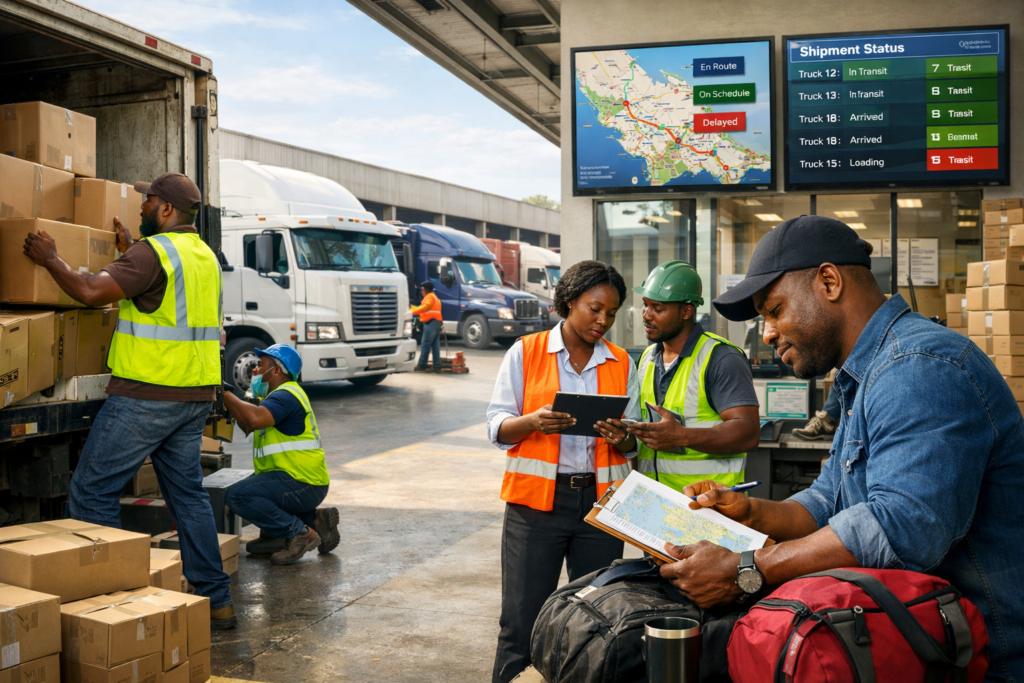
- Track shipments in real time
- Manage documentation digitally
Examples in Africa include platforms like Kobo360, Lori Systems, and OnePort365, which are helping modernize freight operations across multiple countries.
Key Ways Digital Platforms Are Transforming Freight Sourcing
1. Faster Truck Matching and Booking
One of the biggest changes digital platforms bring is speed.
Instead of making multiple phone calls, businesses can now post a load and get matched with available trucks almost instantly. Algorithms match shipments with nearby trucks based on route, capacity, and availability.
This reduces sourcing time from hours—or even days—to minutes.
Digital platforms eliminate the need for repetitive manual coordination, enabling faster decision-making and execution.
2. Improved Pricing Transparency
Traditional freight sourcing often involves inconsistent pricing due to negotiation-based processes and limited market visibility.
Digital platforms solve this by providing:
- Real-time rate comparisons
- Competitive pricing from multiple transporters
- Reduced reliance on middlemen
Some platforms even offer instant quotations, allowing businesses to plan logistics costs more accurately.
This transparency helps companies avoid overpaying and ensures fair pricing across the market.
3. Better Access to Trucking Capacity
In many African markets, one of the biggest challenges is finding trucks when demand is high.
Digital trucking platforms expand access to capacity by aggregating large networks of truck owners across regions. For example, platforms like Kobo360 connect thousands of truck operators with businesses that need freight movement.
This network effect ensures that:
- More trucks are available across routes
- Businesses can scale operations quickly
- Peak-season shortages are reduced
4. Real-Time Shipment Visibility
Visibility has historically been one of the weakest areas in African logistics.
Digital platforms address this by offering:
- GPS-based tracking
- Real-time location updates
- Estimated time of arrival (ETA) predictions
- Delivery confirmation systems
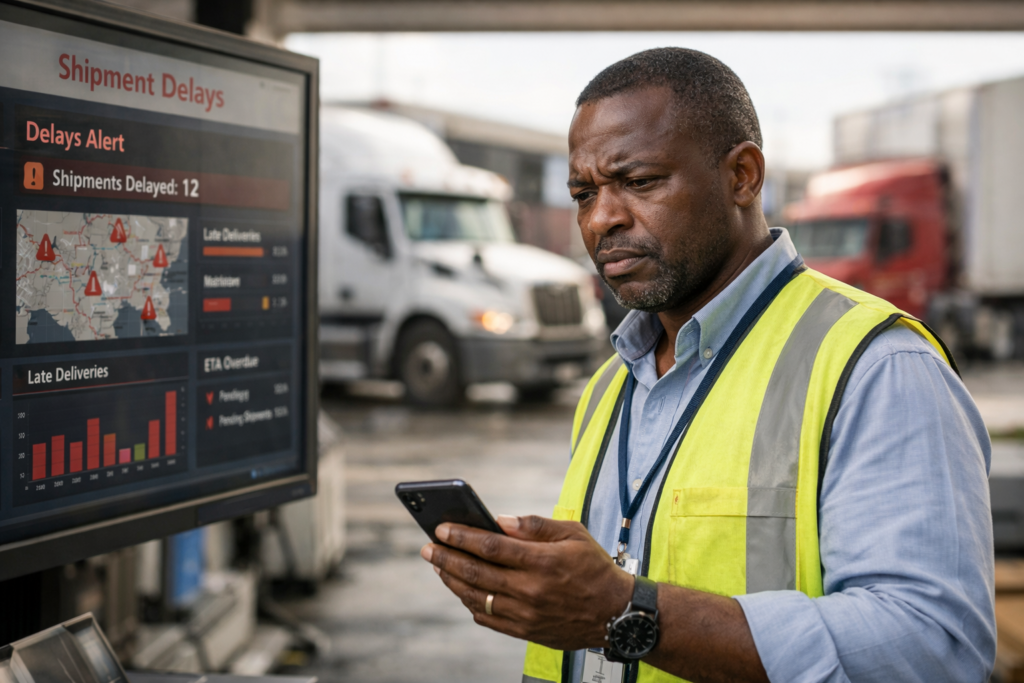
With real-time visibility, businesses can monitor shipments proactively, respond to delays, and keep customers informed.
Platforms like FleetXchange even report up to 99% shipment visibility, highlighting the impact of digital tracking systems.

5. Reduced Logistics Costs
Digital trucking platforms help reduce costs in several ways:
- Eliminating intermediaries
- Optimizing routes using data and algorithms
- Reducing empty return trips (dead miles)
- Improving load matching efficiency
Better load matching ensures trucks are fully utilized, reducing wasted capacity and fuel consumption.
In a region where logistics costs can significantly impact product pricing, these savings are critical for business competitiveness.
6. Enhanced Efficiency Through Automation
Manual logistics processes often involve paperwork, phone coordination, and fragmented communication.
Digital platforms streamline operations by:
- Automating booking processes
- Digitizing documentation
- Centralizing communication between stakeholders
- Providing analytics dashboards
This reduces administrative workload and improves operational efficiency across the supply chain.
7. Increased Trust and Accountability
Trust has always been a major challenge in freight sourcing, especially when dealing with new transport partners.
Digital platforms improve trust through:
- Verified transporter profiles
- Performance ratings and reviews
- Digital records of transactions
- Audit trails for shipments
Structured systems replace informal agreements, reducing disputes and improving accountability.
The Role of Mobile-First Solutions in Africa
One unique aspect of Africa’s digital freight evolution is the mobile-first approach.
Unlike developed markets, where standalone apps dominate, many African logistics solutions are built around tools that users already understand—especially mobile messaging platforms.
For example, some platforms integrate with messaging systems to reduce adoption barriers while adding structure and verification layers on top of existing communication habits.
This approach makes digital adoption easier for truck drivers and small fleet operators.
Key Drivers of Digital Freight Growth in Africa
Several factors are accelerating the adoption of digital trucking platforms:
1. Growth of E-commerce
Increasing demand for fast and reliable delivery is pushing businesses to adopt smarter logistics solutions.
2. High Logistics Costs
Africa’s logistics inefficiencies make digital optimization highly valuable.
3. Mobile and Internet Penetration
More businesses and drivers now have access to smartphones and digital tools.
4. Trade Expansion
Initiatives like the African Continental Free Trade Area (AfCFTA) are increasing cross-border trade and demand for efficient freight systems.
5. Investment in Logistics Tech
Startups like Kobo360 and Lori Systems have attracted significant funding, driving innovation in the sector.
Challenges Facing Digital Trucking Platforms
Despite the progress, some challenges remain:
- Limited internet access in remote areas
- Resistance to technology adoption among traditional operators
- Fragmented logistics ecosystems
- Infrastructure limitations
However, many platforms are addressing these challenges by building lightweight, mobile-friendly solutions that work in low-connectivity environments.
The Future of Freight Sourcing in Africa
The future of freight sourcing in Africa will be increasingly digital, data-driven, and integrated.
Key trends to expect include:
- AI-powered load matching and route optimization
- Predictive analytics for demand forecasting
- Integrated payment and financing solutions
- End-to-end supply chain visibility platforms
- Greater cross-border logistics integration
As adoption grows, digital trucking platforms will become the backbone of freight sourcing across the continent.
Conclusion
Digital trucking platforms are fundamentally changing how freight is sourced in Africa. By replacing manual processes with technology-driven solutions, they are improving speed, transparency, cost efficiency, and reliability.
For growing businesses, adopting these platforms is no longer optional—it is becoming a competitive necessity.
Companies that embrace digital freight solutions will benefit from better access to trucking capacity, improved delivery performance, and stronger control over logistics operations.
In Africa’s evolving logistics landscape, the future of freight sourcing is digital—and it is already here.
References & Outbound Links
- Digital freight platforms and WhatsApp-based logistics systems in Africa
https://www.kweli.co.za/digital-freight-platforms-africa/ - OnePort365 and digital freight management in Africa
https://techcabal.com/2021/10/18/oneport-365-digitization-of-the-freight-industry-in-africa/ - Benefits of digital freight marketplaces
https://acceleratemanagementschool.co.za/supply-chain-and-logistics/the-benefits-of-digital-freight-marketplaces-a-game-changer-in-supply-chain-management-and-logistics/ - FleetXchange digital freight coordination platform
https://fleetxchange.africa/ - African digital freight companies (CIO)
https://www.cio.com/article/189481/6-top-african-digital-freight-management-companies.html - Kobo360 digital logistics platform
https://en.wikipedia.org/wiki/Kobo360 - Digital transformation of logistics in Africa
https://radarafrica.com/africa/digital-technology-revolutionizes-logistics-in-africa/ - Rise of digital freight platforms in Africa
https://oithamarine.com/the-rise-of-digital-freight-platforms-in-africa-transforming-logistics-and-supply-chains/