In road freight operations, few variables are as unpredictable—and as influential—as weather and road conditions. For businesses managing interstate haulage, FMCG distribution, raw material movement, or industrial deliveries, poor planning around these two factors can lead to delays, cargo damage, rising fuel costs, safety risks, and missed SLAs.
Across Nigeria and many African markets, haulage planning is already complex due to infrastructure gaps and long transit corridors. Add heavy rainfall, flooding, extreme heat, potholes, traffic bottlenecks, or poor rural roads, and even the most efficient freight schedule can quickly unravel.
This is why weather and road intelligence should be a core part of modern haulage planning—not an afterthought.
This article explores how weather and road conditions affect freight execution and the strategies businesses can use to improve delivery reliability.
Why Weather Matters in Haulage Operations
Weather directly affects vehicle performance, road safety, visibility, transit speed, and route accessibility.
Studies on transport resilience show that rainfall, flooding, fog, wind, and extreme temperatures significantly reduce road capacity and increase freight delays.
For long-haul trucking, this translates into:
- Slower average speed
- Longer transit windows
- Higher accident risk
- Increased maintenance frequency
- Route diversions
- Delivery rescheduling
The most effective haulage teams treat weather forecasting as part of dispatch planning.
1) Heavy Rain and Flooding Disrupt Route Reliability
In Nigeria, the rainy season creates major haulage disruptions.
Heavy rain impacts freight by:
- Reducing driver visibility
- Increasing braking distance
- Making roads slippery
- Weakening road shoulders
- Causing flooding on key corridors
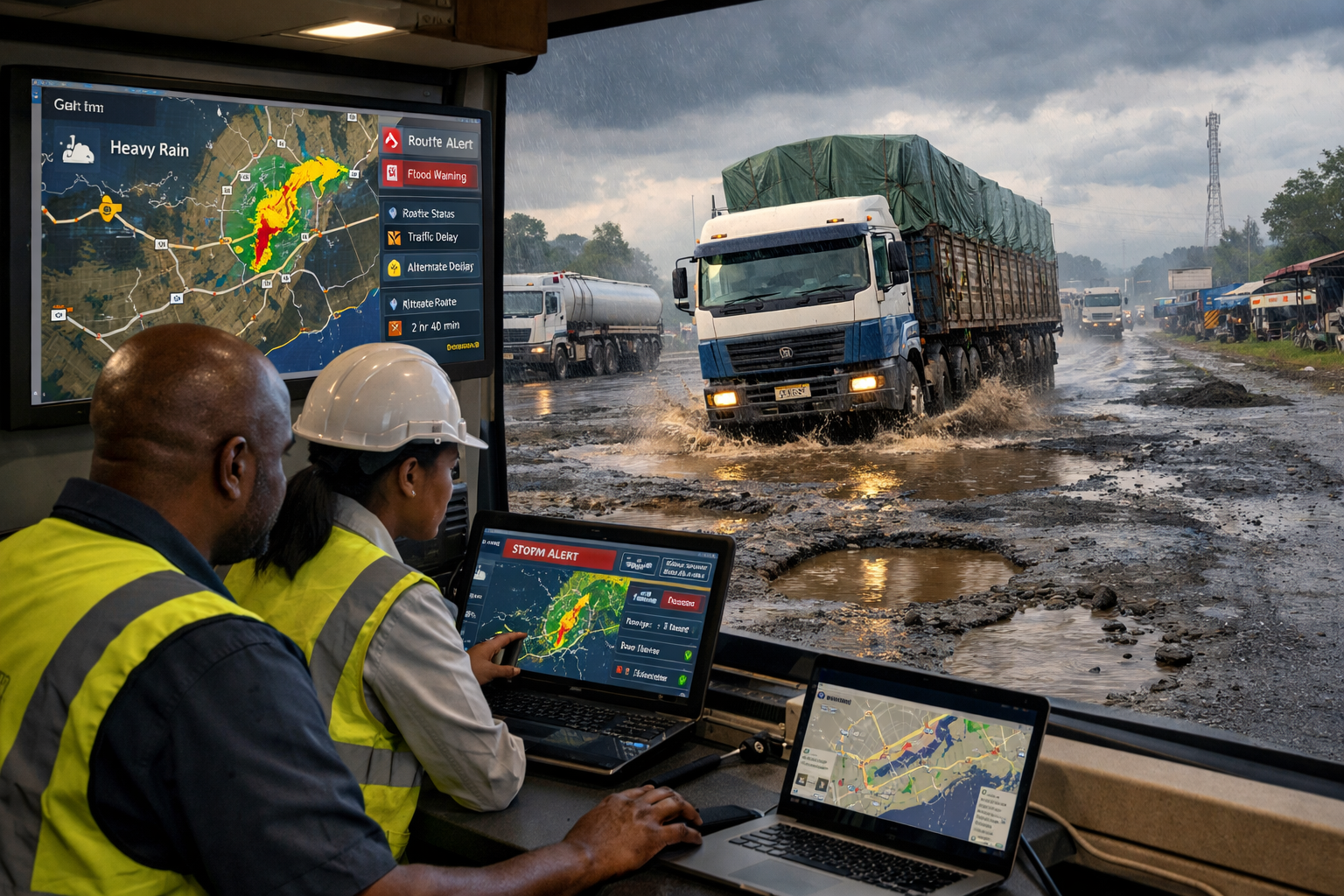
Flood-prone routes may become temporarily impassable, forcing detours that increase transit time and fuel consumption. Research shows flooding and rainfall are among the strongest causes of logistics delays globally.
For haulage planners, this means building seasonal route alternatives in advance.
2) Poor Road Conditions Increase Transit Time
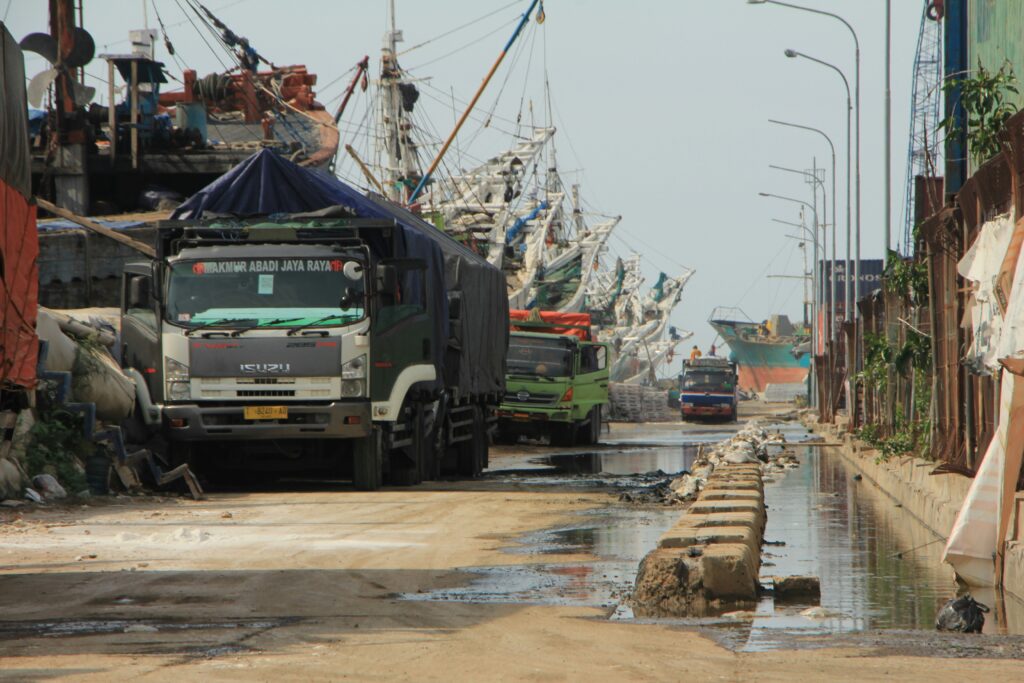
Road quality is one of the biggest variables in African freight movement.
Common road issues include:
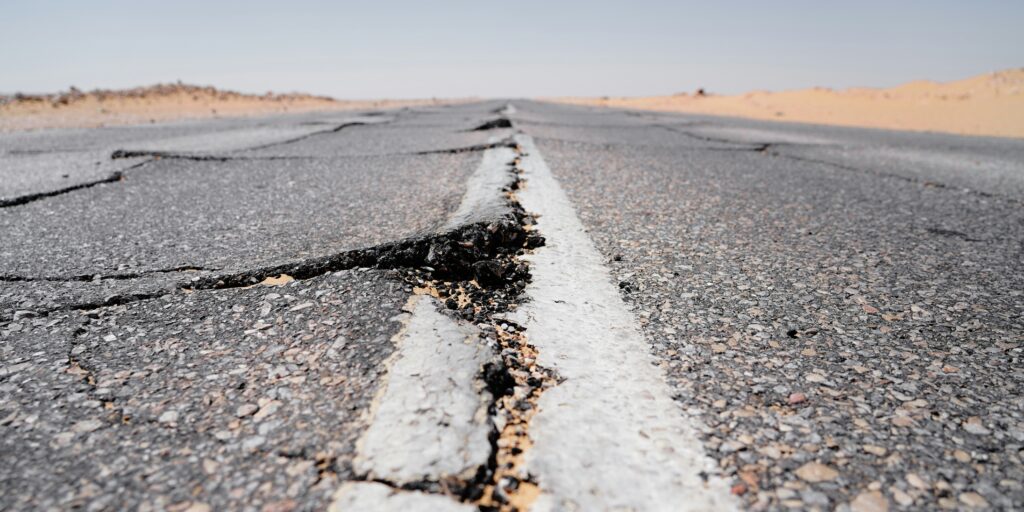
- Potholes
- Failed road shoulders
- Broken bridges
- Narrow rural roads
- Unpaved access roads
- Congestion-prone urban corridors
These conditions force trucks to reduce speed significantly, increasing lane transit times and affecting delivery commitments.
For heavy trucks, damaged roads also increase:
- Suspension wear
- Tire damage
- Fuel usage
- Cargo instability
Road-condition mapping is critical when planning multi-state freight lanes.
3) Extreme Heat Affects Truck Performance
Heat is often overlooked in haulage planning, especially in West Africa.
Extreme temperatures can cause:
- Tire blowouts
- Engine overheating
- Faster brake wear
- Refrigeration unit stress
- Cargo spoilage risk for perishables
Temperature extremes are increasingly recognized as a logistics risk, especially for long-distance freight.
For fleets operating on routes such as Lagos–Kano or Abuja–Maiduguri, midday heat windows should influence departure timing.
4) Fog and Dust Reduce Visibility
Certain regions experience seasonal fog, haze, or dust conditions that reduce visibility.
This affects:
- Driver speed
- Safe overtaking distance
- Junction approach timing
- Night driving performance
Low visibility often forces slower average speeds, directly affecting ETA accuracy.
Best practice includes:
- Visibility-based route timing
- Headlight and brake inspections
- Reduced night transit exposure
- Corridor-specific driver alerts
5) Bad Roads Increase Cargo Damage Risk
Road quality doesn’t only affect timing—it also affects cargo integrity.
Poor roads can lead to:
- Excessive cargo vibration
- Pallet shifts
- Load imbalance
- Packaging damage
- Broken seals
- Product loss
This is especially important for:
- Fragile industrial materials
- Electronics
- Pharmaceuticals
- Agricultural produce
- Consumer packaged goods
Load-securing standards should be adjusted based on route road quality.
6) Weather Changes Fuel Consumption Patterns
Adverse weather and poor roads directly increase fuel costs.
For example:
- Flood diversions increase mileage
- Muddy roads require more engine power
- Stop-and-go traffic in rain increases fuel burn
- Hot weather raises cooling-system load
These variables make static freight cost assumptions unreliable.
Modern haulage planning should include dynamic fuel forecasting based on route and season.
7) Road Conditions Affect Truck Availability
Poor road corridors increase truck wear, which reduces fleet availability over time.
Repeated exposure to bad roads causes:
- Suspension failure
- Axle issues
- Brake system stress
- Tire damage
- Chassis wear
This leads to more downtime, lower truck utilization, and reduced fleet productivity.
Haulage planners should assign trucks based on:
- Route severity
- Cargo sensitivity
- Vehicle age
- Maintenance readiness
Truck-route matching improves both reliability and asset life.
8) Weather Forecasting Improves Dispatch Decisions
The best logistics teams now use weather intelligence as a planning input.
Forecast-based planning helps with:
- Departure timing
- Safer route selection
- Driver shift design
- Load-protection decisions
- Customer ETA communication
Weather-informed route planning reduces preventable delays and improves on-time delivery performance.
For example, delaying departure by 4 hours to avoid heavy rainfall may save an entire day of downstream disruption.
9) Seasonal Planning Creates Better Haulage Stability
Weather risk is rarely random—it often follows seasonal patterns.
Examples include:
- Rainy season flooding
- Harmattan dust and visibility issues
- Heatwaves in northern corridors
- Holiday traffic mixed with weather disruption
Businesses should redesign haulage schedules seasonally by adjusting:
- Transit buffers
- Delivery promises
- Vehicle allocation
- Driver shifts
- Maintenance cycles
Seasonal freight planning is far more effective than reactive dispatching.
10) Technology Helps Predict Road and Weather Risk
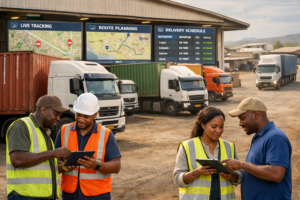
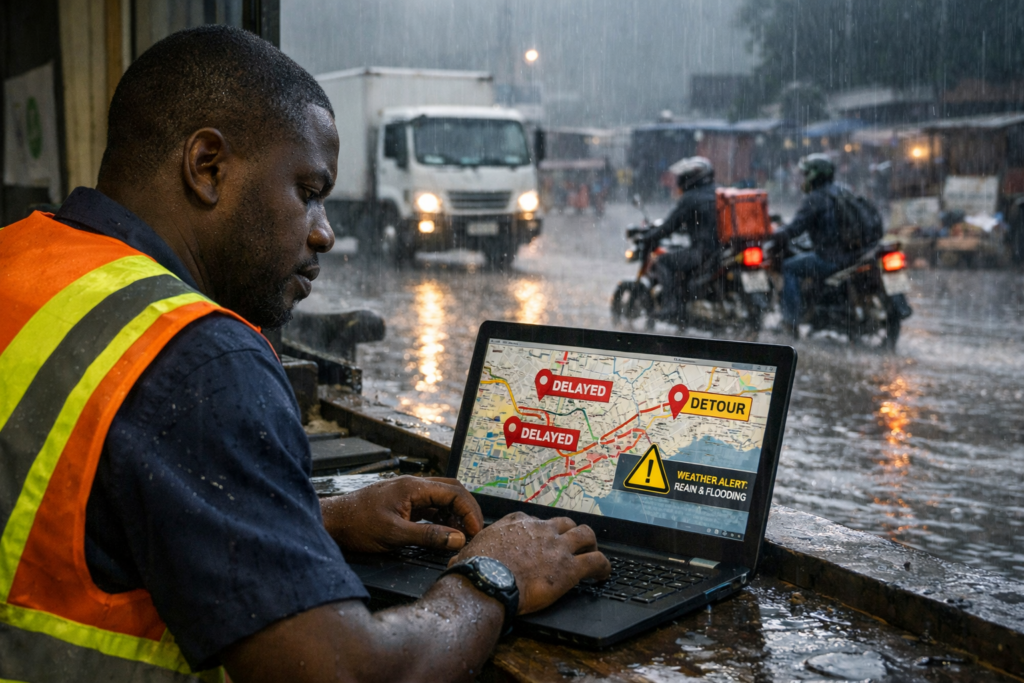
Modern logistics platforms increasingly combine:
- GPS route data
- Traffic feeds
- Road-condition history
- Weather forecasts
- Driver behavior analytics
This allows companies to predict where delays are most likely and proactively reroute freight.
AI-powered route optimization is becoming especially valuable for multi-state road freight and high-volume FMCG distribution.
Best Practices for Weather-Resilient Haulage Planning
To reduce disruption, businesses should:
- Build seasonal route playbooks
- Use pre-dispatch weather checks
- Create route risk scores
- Match truck type to corridor quality
- Add transit buffers during rainy periods
- Monitor flood-prone highways
- Maintain strong customer ETA communication
These practices improve both operational resilience and customer trust.
Conclusion
Weather and road conditions are two of the most important variables in haulage planning. They influence speed, cost, safety, truck availability, cargo integrity, and delivery reliability.
For businesses moving freight across Nigeria and Africa, the difference between efficient operations and repeated delays often comes down to how proactively these variables are managed.
The most resilient logistics teams don’t just plan for distance—they plan for road quality, seasonal weather, corridor risk, and vehicle suitability.
In modern freight operations, smarter haulage planning starts with environmental awareness.
References & Outbound Links
- MDPI Logistics — Weather-related disruptions in transport and logistics
https://www.mdpi.com/3190396 - FHWA — Road weather management and freight reliability
https://ops.fhwa.dot.gov/publications/fhwahop16018/chp6.htm - Urban Transport News — Weather challenges in haulage logistics
https://urbantransportnews.com/article/the-challenges-of-haulage-logistics-navigating-traffic-weather-and-other-obstacles - Defi Group — Influence of weather forecasts on transport decisions
https://www.defigroupe.fr/en/news-actualites/influence-previsions-meteorologiques-transport/ - Kerwin Heavy Haulage — Weather effects on heavy transport
https://www.kerwinheavyhaulage.ie/7-critical-ways-weather-affects-heavy-haulage-transportation/