For businesses that rely on road freight to move goods across cities, states, or regions, transportation strategy plays a major role in operational success. Manufacturers, distributors, agricultural exporters, and FMCG companies often face an important decision: Should they secure trucks through long-term contracts or rely on on-demand trucking?
Both models offer unique advantages and challenges. Choosing the right approach can determine whether a company maintains reliable deliveries, manages logistics costs effectively, and scales operations smoothly.
This article explores the differences between contract trucking and on-demand trucking, helping growing businesses determine which model works best for their supply chain needs.
Understanding Contract Trucking
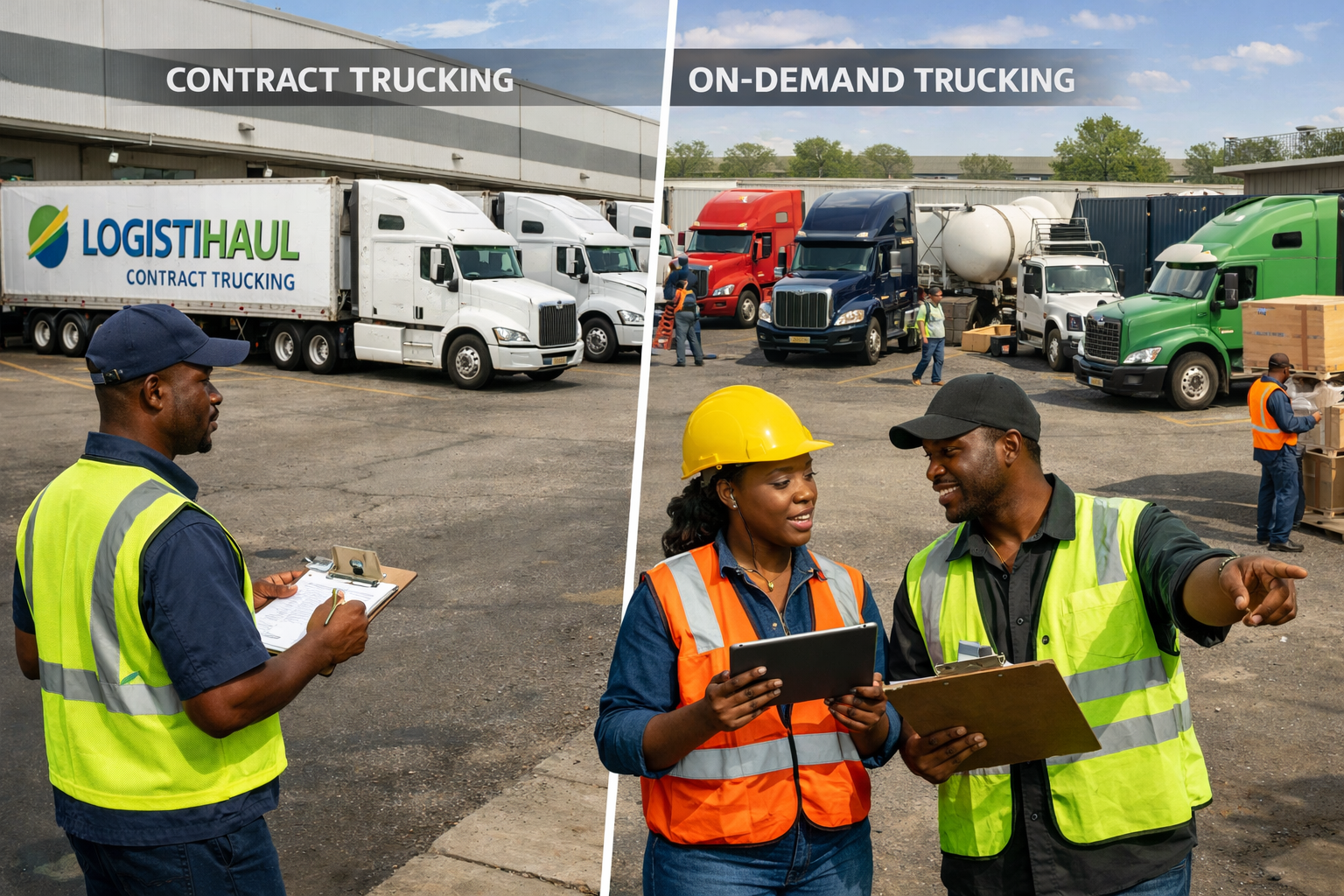
Contract trucking refers to a structured agreement between a shipper and a haulage provider where trucking capacity is reserved for a defined period. The agreement typically specifies routes, pricing structures, delivery expectations, and service-level commitments.
Under this model, businesses partner with a trucking company or fleet operator to handle their freight movement on a regular basis.
Key Characteristics of Contract Trucking
- Long-term partnership with a transport provider
- Pre-agreed pricing and service conditions
- Dedicated or prioritized truck capacity
- Structured service-level agreements (SLAs)
Contract trucking is commonly used by companies that move consistent volumes of goods on predictable routes, such as manufacturers distributing products to regional warehouses or retailers replenishing store inventory.
Benefits of Contract Trucking
1. Guaranteed Capacity
One of the biggest advantages of contract trucking is reliable truck availability. Businesses operating under contract agreements have priority access to vehicles even during periods of high demand.
This reliability is particularly important during peak seasons when trucking capacity becomes scarce.
2. More Predictable Freight Costs
Contract agreements often establish stable pricing structures, helping businesses forecast logistics expenses more accurately. This predictability makes budgeting easier and protects companies from sudden freight rate spikes.
3. Stronger Operational Coordination
Working with a consistent haulage partner allows for better coordination between logistics teams, drivers, and warehouse operations. Over time, transport partners gain a deeper understanding of routes, delivery schedules, and operational requirements.
This familiarity improves efficiency and reduces delivery disruptions.
4. Improved Service Quality
Contract transport providers are usually held accountable through service-level agreements that define delivery timelines, communication standards, and performance expectations.
These agreements help maintain professional standards and minimize operational risks.
Limitations of Contract Trucking
Despite its advantages, contract trucking also has some limitations.
1. Reduced Flexibility
Businesses that rely exclusively on contracted trucks may struggle to adapt quickly when shipment volumes fluctuate. If demand suddenly increases, additional capacity may not be immediately available.
2. Long-Term Commitments
Contract agreements may lock businesses into fixed pricing or minimum volume requirements. If freight volumes drop unexpectedly, companies may still be obligated to pay for unused capacity.
3. Limited Access to Market Opportunities
In some cases, on-demand trucking rates may be lower than contract rates, especially during periods of excess trucking capacity. Companies tied to long-term contracts may miss these short-term savings.
Understanding On-Demand Trucking
On-demand trucking allows businesses to source trucks whenever shipments need to be moved. Instead of long-term contracts, trucks are booked per trip through brokers, transport marketplaces, or digital freight platforms.
This model provides companies with flexible access to transportation capacity without long-term commitments.
Benefits of On-Demand Trucking
1. Maximum Flexibility
On-demand trucking is ideal for businesses with fluctuating freight volumes. Companies can request trucks when needed and scale back when shipments decrease.
This flexibility helps growing businesses manage uncertainty and adapt to changing market conditions.
2. Quick Access to Capacity
Digital freight platforms and logistics marketplaces allow companies to locate available trucks quickly. This can be particularly useful for urgent shipments or last-minute distribution needs.
3. Lower Upfront Commitments
Since there are no long-term contracts, businesses can avoid fixed obligations. This is especially beneficial for startups and expanding companies that are still refining their logistics strategies.
4. Competitive Market Pricing
On-demand trucking often allows businesses to compare pricing from multiple transport providers, helping them secure competitive freight rates.
Challenges of On-Demand Trucking
While on-demand trucking offers flexibility, it also presents certain risks.
1. Uncertain Capacity During Peak Periods
During peak seasons, such as major holidays or agricultural harvest periods, truck demand increases significantly. Businesses relying solely on on-demand sourcing may struggle to secure vehicles quickly.
2. Less Predictable Pricing
Freight rates in the on-demand market fluctuate based on fuel costs, demand levels, and route conditions. This can make budgeting logistics expenses more difficult.
3. Variable Service Quality
Because shipments may be handled by different transport providers each time, service quality can vary. Businesses may encounter differences in driver professionalism, communication practices, and delivery reliability.
When Contract Trucking Makes More Sense
Contract trucking is often the better choice when:
- Freight volumes are consistent throughout the year
- Distribution routes are predictable
- Delivery reliability is critical to operations
- Companies require dedicated capacity
Manufacturers, large distributors, and companies operating regional supply chains often benefit from contract trucking arrangements.
When On-Demand Trucking Is the Better Option
On-demand trucking tends to work best when:
- Freight volumes fluctuate significantly
- Businesses operate seasonal distribution cycles
- Urgent shipments occur frequently
- Companies want flexibility while scaling operations
Startups, agricultural exporters, and businesses experiencing rapid growth often rely heavily on on-demand trucking.
The Hybrid Model: A Growing Industry Trend
Many logistics experts recommend a hybrid trucking strategy that combines both models.
Under this approach, businesses secure a base level of capacity through contract trucking while using on-demand trucking to handle overflow shipments or unexpected demand spikes.
This strategy provides the stability of long-term partnerships while maintaining the flexibility to adapt to changing logistics requirements.
For growing businesses, the hybrid model often delivers the best balance between cost efficiency, reliability, and scalability.
The Role of Technology in Modern Trucking Sourcing
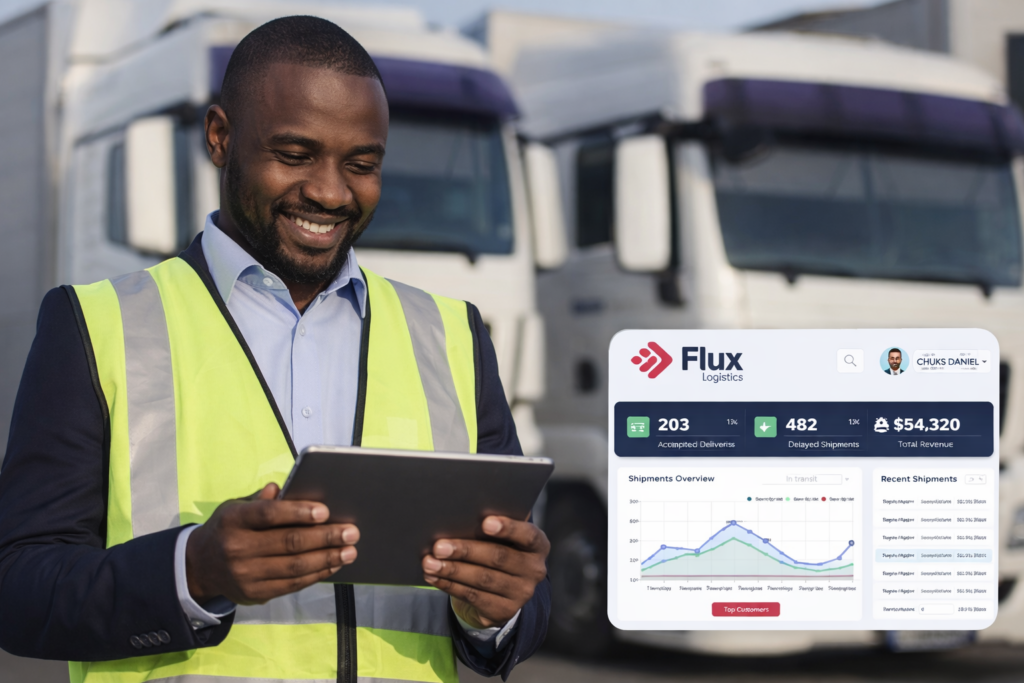
Technology is transforming how companies source trucking services. Digital freight platforms, logistics dashboards, and fleet tracking tools allow businesses to:
- Monitor truck availability
- Track shipments in real time
- Compare freight rates
- Evaluate transporter performance
These tools improve visibility and help companies make better decisions about when to rely on contract capacity versus on-demand trucking.
As supply chains become more data-driven, companies that adopt digital logistics solutions gain greater control over their transportation operations.
Conclusion
Choosing between contract trucking and on-demand trucking is not simply a logistical decision—it is a strategic choice that affects cost management, delivery performance, and business scalability.
Contract trucking offers reliability, stable pricing, and strong operational partnerships. On-demand trucking provides flexibility, scalability, and rapid access to transportation capacity.
For many growing businesses, the most effective strategy is combining both models. By balancing dedicated transport partnerships with flexible on-demand capacity, companies can maintain reliable deliveries while adapting to changing market demands.
In today’s fast-moving logistics environment, businesses that build flexible and data-driven trucking strategies will be best positioned to support long-term growth.
References
- Transport Geography – Freight transport systems and logistics operations
https://transportgeography.org/?page_id=1680 - Supply Chain Digital – On-demand logistics and flexible freight capacity
https://www.supplychaindigital.com/technology/on-demand-logistics-powering-flexible-freight-solutions - McKinsey & Company – Supply chain resilience and logistics strategy
https://www.mckinsey.com/capabilities/operations/our-insights/supply-chain-resilience - FreightWaves – Trends shaping the trucking industry
https://www.freightwaves.com/news/category/trucking