
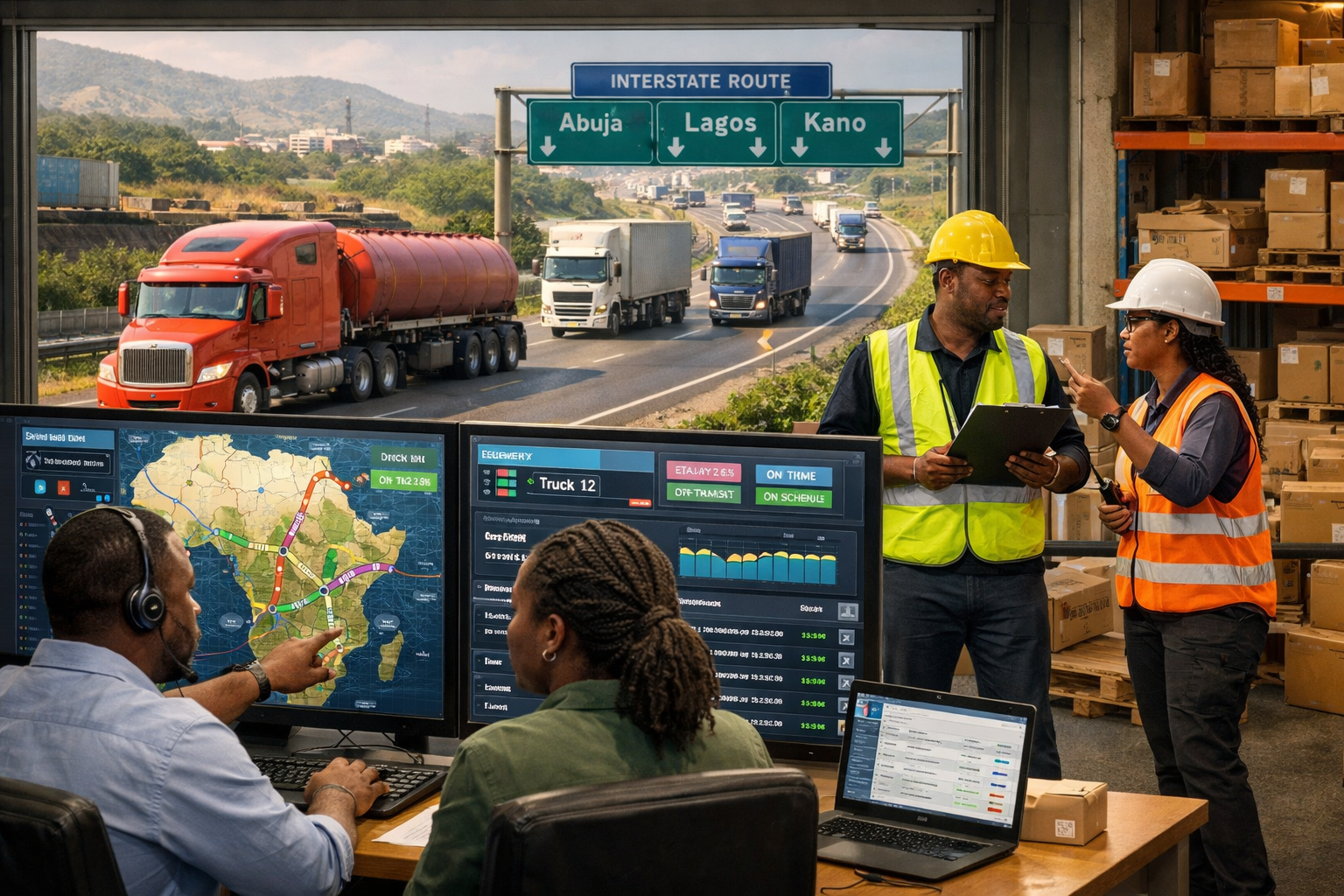
In interstate freight movement, delivery delays are more than just timing issues—they affect customer satisfaction, inventory planning, production schedules, and overall supply chain performance. For businesses moving goods from Lagos to Kano, Port Harcourt to Abuja, or across regional distribution corridors, a delayed shipment can create ripple effects that disrupt entire operations.
In Africa’s logistics environment, interstate freight faces additional pressure from road conditions, security concerns, traffic congestion, weather disruptions, compliance checks, and inconsistent truck capacity. While some delays are unavoidable, most can be significantly reduced through better planning, stronger haulage partnerships, and real-time visibility systems.
This article explores practical strategies businesses can use to prevent delivery delays in interstate freight movement.
Understand the Root Causes of Delivery Delays
Preventing delays starts with understanding what causes them.
The most common causes of interstate freight delays include:
- Poor route planning
- Last-minute truck sourcing
- Traffic congestion in major corridors
- Vehicle breakdowns
- Driver fatigue and compliance issues
- Weak loading and dispatch processes
- Documentation errors
- Limited shipment visibility
- Security incidents or road diversions
Many of these issues can be controlled before the truck even leaves the loading point. Strong origin-level execution is often the biggest determinant of delivery reliability.
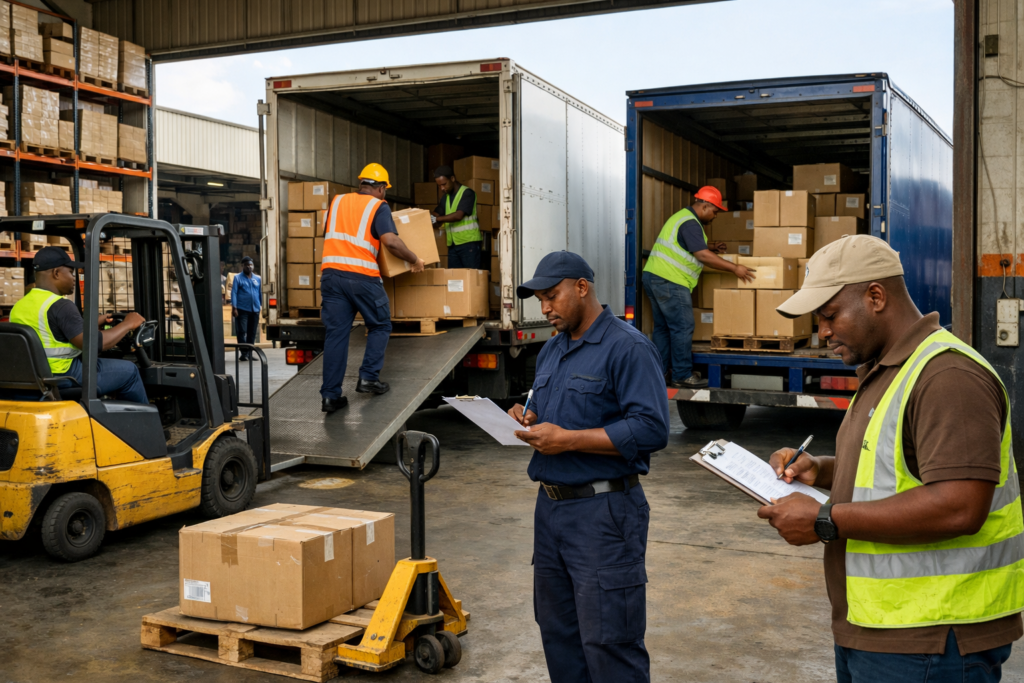
1) Strengthen Dispatch Readiness Before Departure
One of the biggest causes of interstate delays is late dispatch.
When trucks depart behind schedule, every downstream milestone shifts automatically:
- Arrival windows tighten
- Offloading appointments are missed
- Driver rest cycles compress
- Recovery buffers disappear
To prevent this, businesses should standardize:
- Load staging timelines
- Vehicle arrival scheduling
- Driver check-in procedures
- Documentation readiness
- Dispatch approval workflows
A truck that leaves on time already has a major delivery advantage.
2) Improve Route Planning Across States
Interstate haulage routes often cross multiple traffic, toll, and enforcement zones. Poor route selection can add hours—or even a full day—to transit time.
Better route planning should include:
- Traffic pattern analysis
- Known bottleneck avoidance
- Roadwork and closure alerts
- Weather monitoring
- Safer alternative routes
- Checkpoint and toll planning
Advanced route planning tools and GPS-based systems help teams proactively avoid known congestion zones and reduce avoidable delays.
3) Secure Reliable Truck Capacity Early
Many delivery delays begin because trucks are sourced too late.
During peak periods, interstate freight corridors often face:
- Limited truck availability
- Higher spot pricing
- Delayed loading windows
- Poor truck-condition choices
Prevent this by:
- Booking line-haul trucks in advance
- Maintaining contract haulage partners for repeat lanes
- Using on-demand trucking as overflow support
- Forecasting weekly and monthly volume spikes
Capacity discipline is one of the most effective ways to improve interstate delivery performance.
4) Use Real-Time Shipment Tracking
Without live visibility, delays are often discovered too late.
Real-time shipment tracking allows logistics teams to:
- Detect route deviations
- Identify idle time
- Predict late arrivals early
- Communicate proactive ETAs
- Trigger backup delivery actions
GPS and telematics systems are especially valuable for long interstate lanes where multiple risk points exist.
For growing logistics operations, shipment visibility should be treated as a control system—not just a reporting tool.
5) Reduce Vehicle Breakdowns Through Preventive Maintenance
Breakdowns remain one of the most expensive causes of interstate delay.
A single failure on a corridor like Lagos–Kaduna or Onitsha–Abuja can compromise:
- Delivery commitments
- Return trip planning
- Customer unloading schedules
- Driver shift cycles
Reduce this risk by enforcing:
- Preventive servicing schedules
- Tire and brake inspections
- Engine diagnostics
- Backup vehicle plans
- Route-specific vehicle checks
Reliable fleet health is directly tied to reliable delivery performance.
6) Standardize Loading and Cargo Handling
A poorly loaded truck creates delay risks before transit even begins.
Common loading issues include:
- Cargo imbalance
- Improper stacking
- Weak securing methods
- Route-incompatible loading order
- Missing labels
These issues cause:
- Longer unloading time
- Cargo damage claims
- Re-sorting delays at hubs
- Driver safety risks
Organizing freight by destination sequence and route stop order improves both transit efficiency and receiving speed.

7) Fix Documentation Before Movement
Paperwork errors frequently delay interstate freight at checkpoints and receiving points.
Common documentation gaps include:
- Incorrect invoice details
- Missing delivery notes
- Wrong consignee addresses
- Incomplete transport permits
- Missing proof of loading
The best practice is to implement a pre-dispatch documentation checklist covering all shipment and compliance documents.
Documentation accuracy prevents non-transit delays that are often overlooked.
8) Improve Driver Scheduling and Fatigue Management
Driver fatigue is a hidden cause of delivery delays.
Long interstate routes require structured rest and shift planning to avoid:
- Excessive idle stops
- Slow average speed
- Compliance issues
- Safety incidents
- Unplanned overnight delays
Best practices include:
- Shift rotation systems
- Safe rest-stop mapping
- Driver handoff points
- Corridor-specific timing plans
When drivers are scheduled realistically, delivery predictability improves.
9) Create Contingency Plans for Corridor Disruptions
Interstate freight is vulnerable to unexpected disruptions such as:
- Flooded roads
- Security incidents
- Major accidents
- Fuel shortages
- State-level restrictions
Businesses should create route contingency plans that define:
- Backup roads
- Alternative offloading hubs
- Emergency contacts
- Customer ETA escalation processes
The goal is not just avoiding disruption—but recovering quickly when it happens.
10) Monitor Delay KPIs by Route
What gets measured gets improved.
Track route-level performance metrics such as:
- On-time dispatch rate
- Average lane transit time
- Delay frequency by corridor
- Breakdown rate
- Driver wait time
- Delivery confirmation speed
These metrics reveal where delays originate and which corridors need redesign.
Data-driven route management consistently outperforms reactive logistics management.

Conclusion
Preventing delivery delays in interstate freight movement requires far more than faster trucks. The real advantage comes from strong dispatch discipline, smarter route planning, reliable capacity, real-time visibility, and better origin execution.
For businesses operating across Nigeria and West Africa, the companies that consistently deliver on time are not simply moving faster—they are controlling more variables before the journey begins.
In modern freight operations, delivery reliability is built through systems, not luck.
References
- Welcome Logistics — Causes of shipping delays and prevention strategies
https://www.welcome-logistics.com/industryinsights/what-causes-shipping-delaysand-how-logistics-experts-prevent-them - Varuna — Preventing delays in road freight services
https://www.varuna.net/insights/how-to-avoid-delays-and-penalties-in-road-freight-services - ShipEX Logistics — Freight delays and prevention best practices
https://www.shipexlogistics.com/preventing-shipping-delays/ - Best Yet Express — Preventing shipping delays guide
https://www.bestyetexpresstrucking.com/prevent-shipping-delays/ - SeaRates — Effective strategies for reliable freight delivery
https://www.searates.com/ge/blog/post/how-to-prevent-freight-shipping-delays-effective-strategies-for-reliable-delivery