
For a supplier, transportation is one of those costs that can quietly become more expensive without immediately appearing to be a problem. A few additional kilometers on a delivery route may not seem significant, or a partially loaded truck may seem like a temporary inconvenience. But when these inefficiencies happen repeatedly across dozens or hundreds of shipments, they can significantly increase the cost of getting products to customers. This is why transportation costs in Nigeria are not simply a question of negotiating a lower trucking rate. For suppliers, reducing transportation costs requires a closer look at how goods are planned, consolidated, routed, loaded, and delivered.
At the same time, cutting transportation costs too aggressively can create another problem. If a cheaper transportation arrangement results in late deliveries, damaged goods, missed customer commitments, or unreliable supply, the apparent saving may eventually cost the business more.
The real objective, therefore, is not to find the cheapest possible transport option. It is to build a transportation operation that moves the right quantity of goods, on the right route, using the right vehicle, at the right cost and within the required delivery window.
So, how can suppliers reduce transportation costs without sacrificing delivery performance?
What are transportation costs for a business?
Transportation costs are the expenses a business incurs when moving goods from one location to another. For a supplier, that journey could involve moving products from a factory to a warehouse, from a port to a distribution centre, between warehouses, or directly to a customer.
The obvious cost is the amount paid to the trucking or logistics provider. However, the real cost of transportation can include much more than the trucker’s invoice.
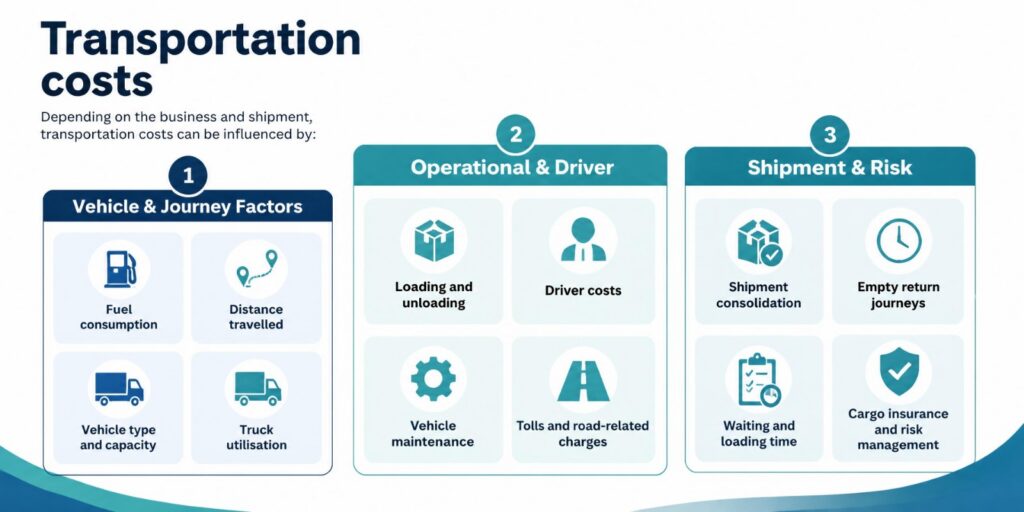
Depending on the business and shipment, transportation costs can be influenced by:
- Fuel consumption
- Distance travelled
- Vehicle type and capacity
- Truck utilisation
- Route conditions
- Loading and unloading
- Driver costs
- Vehicle maintenance
- Tolls and road-related charges
- Waiting and loading time
- Empty return journeys
- Delivery failures
- Shipment consolidation
- Urgent or last-minute transportation
- Cargo insurance and risk management
This means that simply negotiating a lower price per trip may not be enough to reduce your overall logistics expenditure meaningfully.
A supplier could negotiate a cheaper truck rate and still spend more because its trucks are poorly utilised, its routes are inefficient, or too many vehicles are returning without cargo. The first step towards reducing transportation costs is therefore understanding what is actually driving them.
Why transportation costs in Nigeria matter so much for suppliers
Transportation sits between procurement, inventory, distribution and customer fulfillment. A manufacturer may source raw materials at a competitive price, produce efficiently and secure strong customer demand, but still lose margin if the cost of moving goods remains unnecessarily high.
This is particularly relevant in Nigeria because road transportation remains central to domestic freight movement. News reported in December 2025 that around 90% of freight movement in Nigeria still depends on roads, while poor road conditions and energy costs continue to put pressure on logistics operators.For businesses moving goods between major commercial and manufacturing centres, transportation can therefore affect both profitability and customer service.
Ways suppliers can reduce transportation costs in Nigeria
1. Improve truck utilisation
Using the right truck for each shipment can help suppliers reduce unnecessary trips and unused capacity. A vehicle that is too large may leave significant capacity unused, while one that is too small may require multiple trips.
Suppliers should consider shipment weight, volume, destination, and delivery schedule when selecting vehicles. Better truck utilisation allows businesses to move more goods per trip without compromising safety or delivery requirements.
2. Consolidate shipments
When multiple orders are going to the same region within a similar timeframe, consolidating them into fewer trips can reduce transportation and fuel costs.
The key is to consolidate shipments without affecting the customer’s required delivery window. Where timing allows, moving more goods in fewer, better-utilised trucks can make transportation more efficient.
3. Optimise delivery routes
The shortest route is not always the most cost-effective. Traffic, road conditions, delivery locations and the number of stops can all affect the cost and duration of a trip.
Suppliers can reduce unnecessary kilometres by planning routes around these factors and grouping deliveries where possible. Better route planning can lower transportation costs while helping businesses maintain reliable delivery schedules.
4. Reduce empty return trips
A truck returning without cargo still consumes fuel, time, and vehicle capacity. Where suitable return loads are available, suppliers can use existing routes more efficiently by coordinating deliveries in both directions.
Reducing empty trips can improve truck utilisation and lower the overall cost of moving goods, particularly for businesses with regular routes between major commercial locations.
5. Plan transportation in advance
Last-minute transportation often leaves businesses with fewer options and less time to secure suitable trucks, consolidate shipments, or plan efficient routes.
By using production schedules, customer orders, and inventory requirements to anticipate transportation needs, suppliers can plan movements and avoid unnecessary urgent deliveries and premium transportation costs.
6. Choose the right transportation model
Owning a fleet can give businesses greater control, but it also comes with the costs of vehicles, drivers, maintenance, fuel, and fleet management.For businesses with fluctuating transportation needs, using a third-party transportation provider may offer greater flexibility without the cost of maintaining an underutilised fleet. The right model should balance transportation costs with capacity, reliability and delivery requirements.
How to calculate your true transportation cost
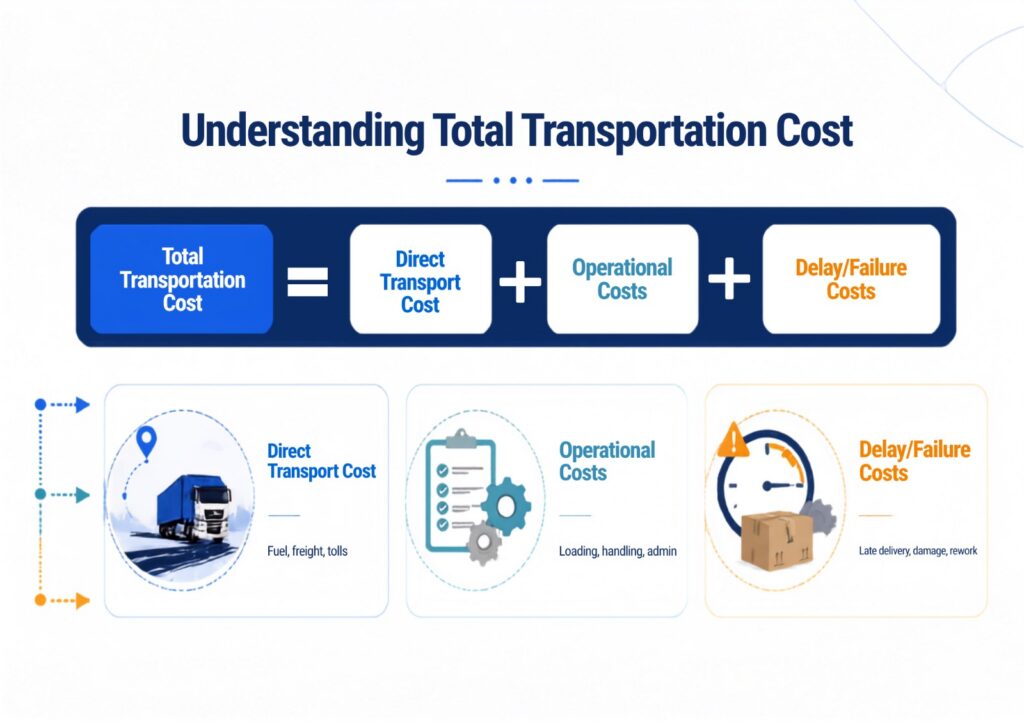
A useful transportation-cost calculation should go beyond the amount paid to the truck operator.
Businesses can consider: Total Transportation Cost = Direct Transport Cost + Operational Costs + Delay/Failure Costs.
Direct transportation costs may include the truck rate, fuel-related charges, tolls, and other movement expenses. Operational costs may include loading, unloading, waiting time, warehouse coordination, and administrative activity.
Delay and failure costs may include emergency transportation, missed delivery windows, customer penalties, damaged goods, and other consequences.
For example, imagine a supplier pays ₦500,000 for a delivery. At first glance, the transportation cost is ₦500,000. But if the shipment is delayed and the business incurs an additional ₦150,000 in emergency transportation to fulfill a customer order, the effective transportation cost becomes significantly higher.This is why transportation cost optimisation should include reliability.
How suppliers can build a more efficient transportation strategy
Reducing transportation costs sustainably requires more than finding a cheaper trucking provider. It requires a system. The first step is understanding your current transportation performance. Suppliers should know how much they spend on different routes, how frequently trucks return empty, how much capacity is typically utilised and how often deliveries miss their required windows.
The next step is to identify the largest sources of inefficiency.
For one supplier, the biggest issue may be poor shipment consolidation. For another, it may be low truck utilisation. Another business may discover that frequent last-minute orders are driving premium transportation costs.Once the biggest cost drivers are identified, the business can focus on addressing those specific problems rather than attempting to reduce every transportation expense simultaneously. This is a much more sustainable approach because it connects cost reduction with operational improvement.
When should a supplier consider outsourcing transportation?
There is no universal threshold at which every supplier should outsource transportation.However, outsourcing may be worth considering when a business:
- Has unpredictable shipment volumes.
- Needs access to trucks across multiple routes.
- Does not want to invest heavily in fleet ownership.
- Lacks internal fleet-management expertise.
- Needs additional capacity during demand peaks.
- Wants to reduce the administrative burden of managing vehicles.
- Needs transportation beyond its normal operating geography.
A third-party transportation provider can give the business access to capacity without requiring it to own every vehicle required to fulfill its distribution needs. For growing suppliers, this flexibility can be particularly valuable because transportation requirements may change faster than the business can justify expanding its own fleet.
How Flux by Matta can help suppliers move goods more efficiently
Transportation is an important part of the wider trade journey. A supplier may have the right product, the right customer, and the right commercial agreement, but the transaction still depends on reliably getting the goods to their destination.
Flux by Matta is built around the trucking and logistics side of that journey, helping businesses access transportation capacity for moving goods. For suppliers, manufacturers, distributors, and other businesses moving cargo across Nigeria, the value of a structured transportation solution goes beyond simply finding a truck.It is about aligning the shipment requirement with the appropriate transportation capacity while providing the business with greater visibility into the movement.
Frequently asked questions about transportation costs for Suppliers in Nigeria
- How can businesses reduce transportation costs in Nigeria?
Businesses can reduce transportation costs by improving truck utilisation, consolidating compatible shipments, planning routes more effectively, reducing empty return trips, matching vehicles to cargo requirements and reducing avoidable waiting time. They can also evaluate whether outsourcing transportation is more efficient than maintaining an owned fleet.
- Does cheaper trucking always mean lower logistics costs?
No. A lower trucking rate may come with longer delivery times, lower reliability or poor vehicle availability. If these issues result in failed deliveries, customer penalties, emergency transport, or additional inventory, the overall logistics cost can increase.
- What are empty miles in transportation?
Empty miles refer to kilometres travelled by a truck without productive cargo. Reducing unnecessary empty journeys can improve vehicle utilisation and help lower transportation costs.
- Is it cheaper to own trucks or outsource transportation?
It depends on the business. Companies with predictable, high-volume transportation requirements may benefit from owning or leasing a fleet, while businesses with fluctuating demand may find third-party transportation more flexible and cost-effective
- How does route planning reduce transportation costs?
Effective route planning can reduce unnecessary kilometres, improve delivery sequencing and help businesses use vehicle capacity more efficiently. The best route is not always the shortest, because traffic, road conditions, delivery windows, and the number of stops also affect the overall cost.
- How can suppliers reduce transportation costs without delaying customers?
The key is to improve efficiency rather than simply reduce service. Shipment consolidation, better planning, appropriate vehicle selection, improved loading processes and reliable transportation partners can reduce costs while maintaining the delivery windows customers require.
Final takeaway: Reduce waste, not reliability
Reducing transportation costs is not about choosing the cheapest truck. It is about eliminating unnecessary trips, empty journeys, poor route planning, and underutilised capacity while keeping deliveries reliable.
With better planning, shipment consolidation and the right transportation partner, suppliers can reduce logistics costs without compromising the delivery experience their customers expect.Need reliable transportation for your business? Explore Flux by Matta to find a more efficient way to move your goods, and request a quote today.