
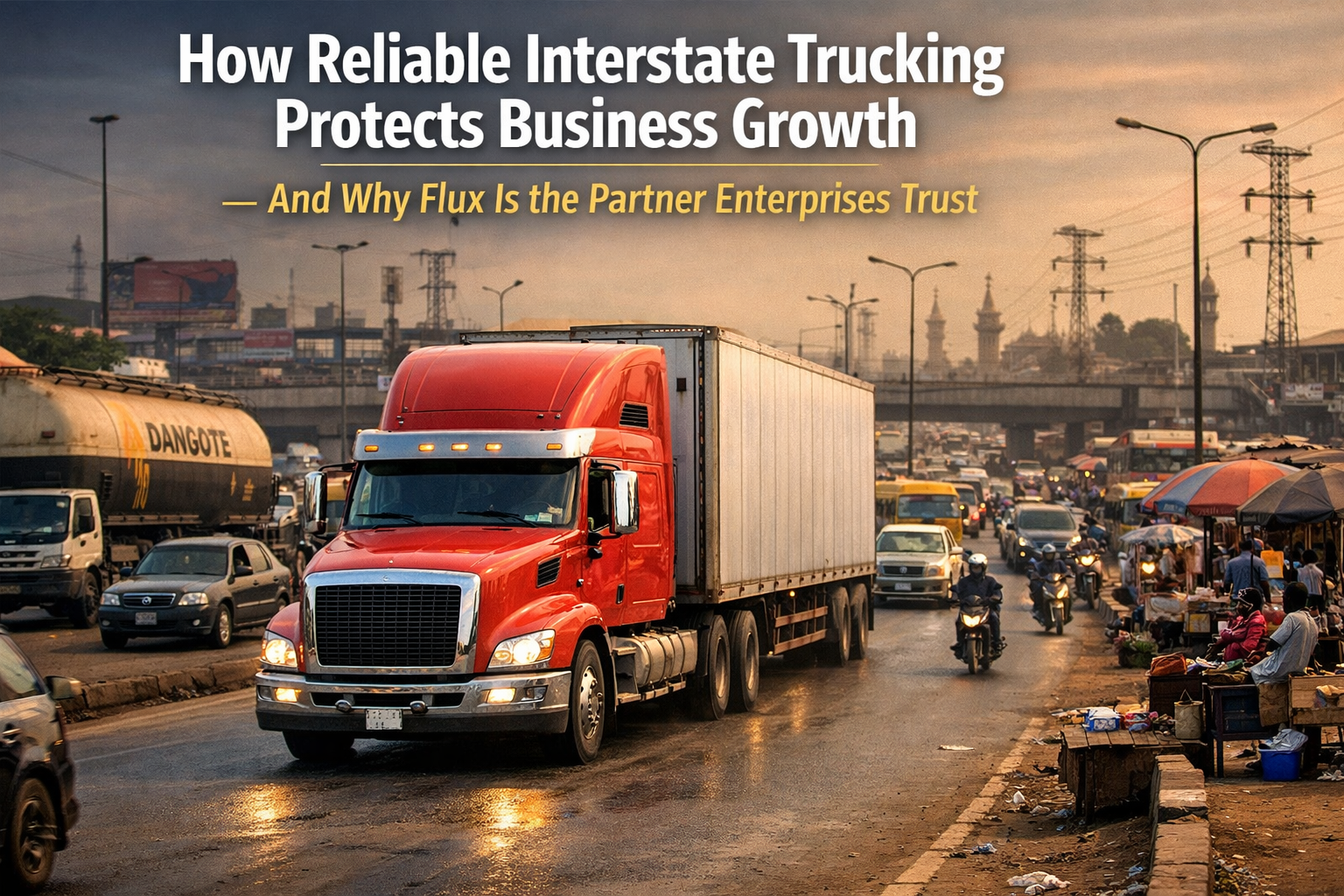
Introduction: Logistics Risk Is Now a Boardroom Issue
In today’s Nigerian business environment, logistics is no longer an operational afterthought — it is a strategic risk factor. Delayed deliveries, damaged goods, missing trucks, and unpredictable transit times directly affect revenue, customer trust, and market competitiveness.
According to insights consistent with McKinsey Africa and World Bank logistics data, supply chain disruptions cost African businesses millions annually, often due to weak transport reliability rather than production failure.
In Nigeria — where road transport carries the bulk of national commerce — the reliability of interstate trucking determines whether businesses grow or stall.

Flux exists to solve this problem.
The Hidden Cost of Unreliable Trucking in Nigeria
Many businesses underestimate the true cost of logistics failure. It is not just about a late truck — it’s about the ripple effect across the entire supply chain.
Unreliable trucking leads to:
- Production shutdowns due to delayed raw materials
- Stockouts and lost sales in retail and distribution
- Contract penalties and SLA breaches
- Increased insurance claims and write-offs
- Damaged brand credibility with partners and customers
For large manufacturers, distributors, and project-based industries, one failed interstate delivery can trigger nationwide operational disruption.
Why Interstate Trucking Is the Most Critical Risk Point
Nigeria’s supply chains are geographically stretched. Goods routinely move:
- From ports to inland factories
- From southern production hubs to northern markets
- Across multiple states with varying road and security conditions

Each journey introduces risk — and without structured control, that risk multiplies.
The most common failure points include:
- Poor journey planning
- Inadequate driver oversight
- Lack of real-time communication
- Mechanical breakdowns mid-route
- No contingency planning for delays
This is where most logistics providers fail — and where Flux differentiates itself.
Flux’s Risk-First Approach to Interstate Trucking
Flux does not treat trucking as a commodity service. It treats every movement as a risk-managed operation designed to protect client revenue and timelines.
1. Predictability Over Promises
Many logistics providers promise speed. Flux prioritizes predictability.
By combining route intelligence, controlled dispatch, and continuous monitoring, Flux delivers:
- Accurate delivery timelines
- Fewer surprise delays
- Consistent performance across routes
Predictability allows clients to plan production, inventory, and sales with confidence — reducing buffer costs and emergency spend.
2. Real-Time Control, Not Blind Trust
One of the biggest risks in Nigerian trucking is not knowing where your cargo is.
Flux eliminates this risk through:
- Live vehicle tracking
- Proactive delivery alerts
- Centralized fleet monitoring teams
- Digital delivery confirmation
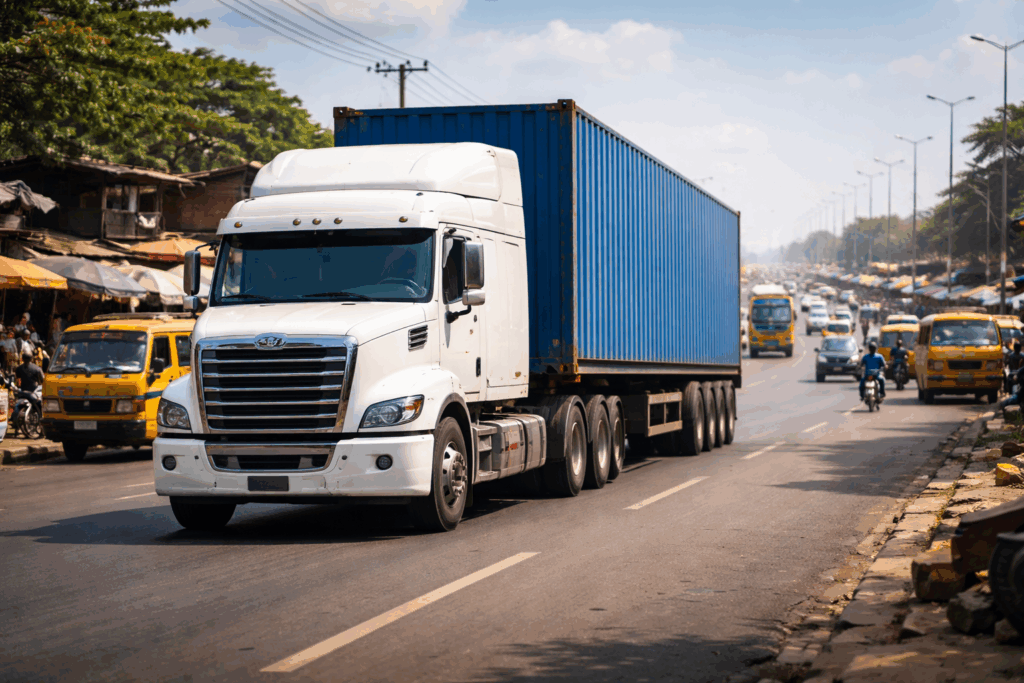
This ensures clients are never in the dark — even on multi-day interstate journeys.
3. Driver Accountability as a Risk-Control Tool
Driver behavior is one of the largest variables in long-distance trucking risk.
Flux applies strict driver governance, including:
- Pre-vetted and verified drivers
- Clear operating procedures
- Monitored journey conduct
- Structured escalation protocols
This aligns with international transport governance principles similar to IRU standards and significantly reduces incidents related to negligence or misconduct.
4. Equipment Reliability for High-Stakes Cargo
A breakdown on a critical route can cripple supply chains.
Flux deploys heavy-duty, fit-for-purpose trucks suitable for Nigeria’s road realities, including:
- High-capacity trucks (10T–40T)
- Trailers and flatbeds for project cargo
- Container carriers for port-linked movements
This minimizes mechanical risk and ensures cargo arrives intact and on schedule.
5. Built-In Contingency and Escalation Planning
Flux plans for disruption — not just ideal conditions.
Each interstate movement is supported by:
- Route alternatives
- Communication escalation paths
- Central operations oversight
- Rapid response coordination
This proactive posture allows Flux to absorb shocks before they impact clients.
Who Benefits Most From Risk-Controlled Trucking?
Flux’s approach is especially valuable for:
- FMCG companies with nationwide distribution
- Manufacturers operating just-in-time production
- Construction and infrastructure projects
- Importers moving cargo inland from ports
- Pharmaceutical and regulated industries
For these businesses, logistics reliability is not optional — it is mission-critical.
Why Businesses Are Moving From Transport Vendors to Logistics Partners
Across Africa, Deloitte and McKinsey insights show a clear shift:
Businesses are replacing fragmented transport vendors with strategic logistics partners who can manage complexity, risk, and scale.
Flux fits squarely into this new category — offering:
- Operational control
- Risk mitigation
- Nationwide reach
- Enterprise-grade coordination

This is not trucking as a cost center — it is trucking as a business enabler.
Conclusion: Reliability Is the New Competitive Advantage
In Nigeria’s volatile operating environment, the companies that win are not just the fastest — they are the most reliable.
Interstate trucking sits at the heart of supply chain risk, and Flux is redefining how that risk is managed. By combining technology, governance, and heavy-duty capability, Flux helps businesses move goods with confidence — even across Nigeria’s most demanding routes.
When reliability matters, Flux delivers.
References
- World Bank Logistics Performance Index – https://lpi.worldbank.org
- McKinsey Africa Infrastructure & Supply Chain Insights – https://www.mckinsey.com/featured-insights
- Deloitte Africa Transport & Logistics Studies – https://www2.deloitte.com
- International Road Transport Union (IRU) – https://www.iru.org